In this post, you’ll learn how to set up and configure all the necessary components to enable Snowflake’s Snowpipe for automated and reliable data ingestion using Azure. We’ll walk through how to configure Azure Blob Storage, set up Event Grid, and integrate everything step by step to allow Snowflake to seamlessly ingest data from your Azure cloud storage.
Continue reading “Getting Started with Snowflake’s Snowpipe for Data Ingestion on Azure”Category: Azure
Database Migration Service – We do not have sufficient capacity for the requested VM size in this region
As the title of this post indicates, the Database Migration Service (DMS) could experiment with problems in very rare cases with the capacity to start/create a service due to not having enough resources in a specific region. It is interesting to start explaining why the provisioned number of Virtual Machines (VM) could impact DMS. If we ask Why? The answer is simple: behind the scenes, the VMs represent the “workers” in charge of executing ALL the tasks required by the migration service of DMS.
Continue reading “Database Migration Service – We do not have sufficient capacity for the requested VM size in this region”Setting up an Azure SQL Managed Instance
As every option available in Azure and particularly talking about SQL, for the classic question about What option is better for me? The classic answer is still valid and this is “It depends”. Your necessity or your business workload or architectural design would influence in a determinant way with your decision.
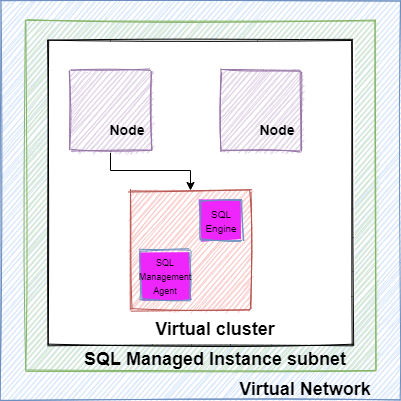
In this article, I am going to explain in a sort of step-by-step guide an approach for configuring a new Azure SQL Managed Instance from now in advance called simply SQL MI. It is so important to distinguish that exist different ways to arrive at the same result, but the most important is to understand the core concepts.
Continue reading “Setting up an Azure SQL Managed Instance”Configuring a Cassandra cluster on Azure – Part III
This is the last article of the series about “Configuring a Cassandra Cluster in the Cloud” composed of three articles, the first article was about the architecture of the Cassandra Cluster and complete prerequisites, and in the second article we walked through the setup process for installing Cassandra, and finally, in this article, we will be developing all the steps for completing our solution in Azure. I would like to highlight that these particular series include Azure as the cloud platform, however, the first two articles can be considered agnostic in terms of the mechanisms and approaches used for the main configuration of the Cassandra Cluster.
Continue reading “Configuring a Cassandra cluster on Azure – Part III”